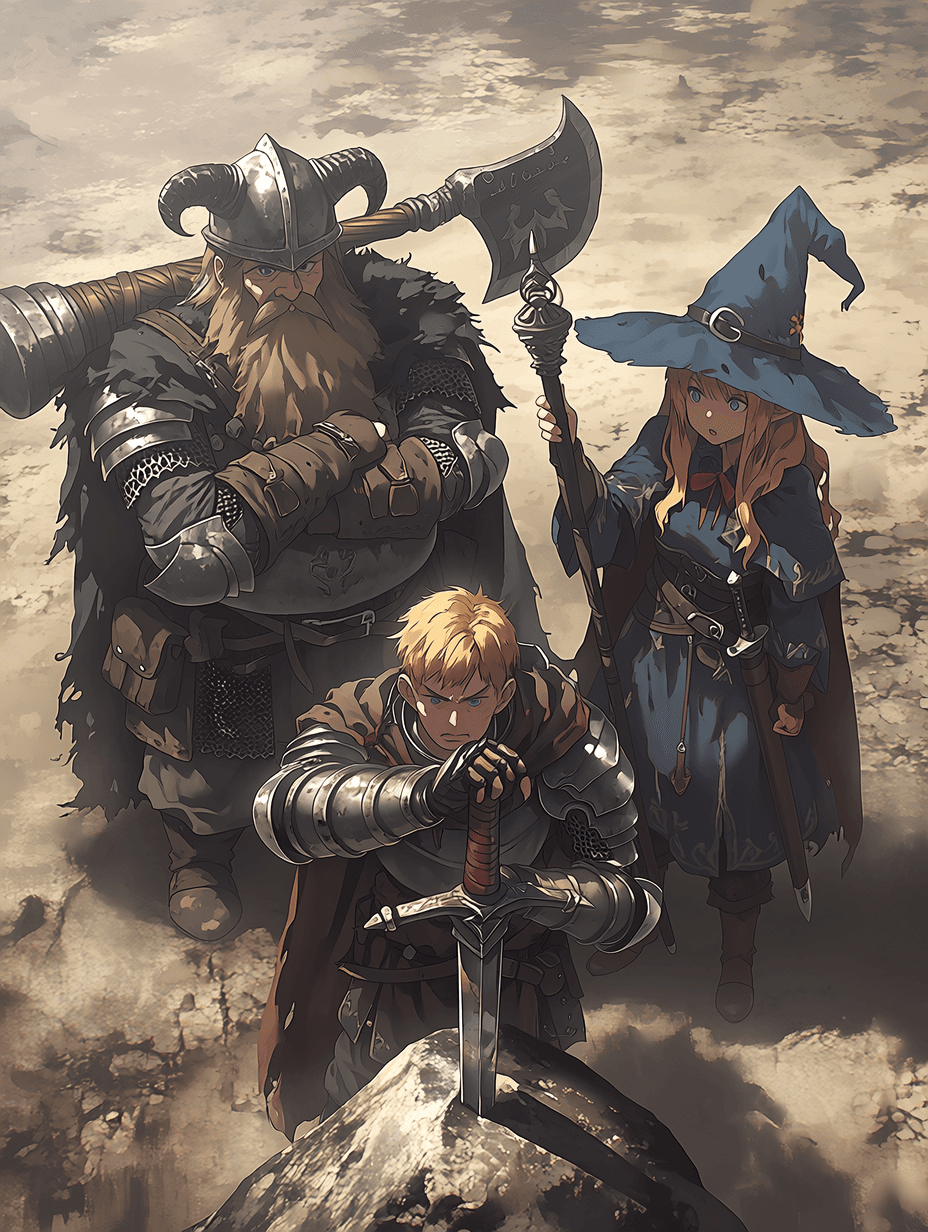

For cosplayers and LARPers, building a character is months of labor: crafting, research, accent work, lore deep-dives. But when you step onto the floor or into the woods, the costume is only the entry fee. What carries the immersion is whether your character holds up when someone asks a question you didn't prepare for.
AI has become the most practical tool for character preparation that the LARP and cosplay community hasn't fully discovered yet. Not for generating backstory text to copy-paste, but for live practice: running your character through adversarial questioning, discovering where your lore has holes, and finding your character's voice before an audience of strangers does it for you.
Here is exactly how to use it.
1. Crafting Rich, Watertight Character Backstories
A great LARP character needs more than a cool costume. They need motivation, internal contradictions, secrets they'd protect, and history that explains why they are the way they are. The problem is that writing all of that in a vacuum leads to either a sparse character who falls apart under questioning, or an overbuilt lore document that you cannot actually remember under pressure.
AI lets you discover backstory through conversation rather than construction. Feed a roleplay AI your character's core traits (profession, the event that shaped them, a flaw they don't acknowledge) and then ask it questions as if it is another player at the event. The answers that come naturally reveal the backstory. The answers that feel wrong tell you where the character still has gaps.
For an immediately practical example of how interconnected backstories create dramatic tension across a full cast: Veiled Vows: a multi-character mystery built around converging hidden histories demonstrates the kind of interpersonal web you're building toward. Every character in that scenario has a secret that intersects someone else's. That is the standard worth aiming for.
For gothic and Victorian-style LARP characters specifically, Murder in the Mist: a Victorian mystery scenario with detailed period-accurate backstories is an excellent structural blueprint for how hidden agendas and layered motives get revealed through in-character dialogue rather than exposition.
2. Maintaining Character Consistency Under Pressure
The moment your backstory actually matters is when an experienced LARPer backs your character into a corner and asks the question you hoped no one would ask. If your character is hiding something (a past betrayal, a false identity, a debt they owe), you need to know exactly how they deflect, how far they will go before lying, and what makes them crack.
You can practice all of this before the event by setting an AI as an adversarial or inquisitive force and running interrogation drills. Treat it like a sparring session: the AI asks the uncomfortable questions, you answer in character, and you discover in a low-stakes environment where your consistency breaks down.
For direct practice defending your character's secrets against relentless questioning, try The Interrogation: an AI character designed to test your character resolve under cross-examination. It will find every hole in your story.
If your character operates on the wrong side of the law (a smuggler, a spy, a con artist with three aliases), practice maintaining your alibi and staying composed under high-stakes pressure in the Bank Robbery Accomplice scenario. Characters built for deception need the most preparation because the inconsistencies accumulate fastest.
3. Mastering In-Character Dialogue and Voice
Voice is the hardest part of character work and the first thing that breaks when you get nervous. Do they speak in formal, archaic prose? Are they terse and reactive? Do they deflect with humor? The only way to make a voice feel natural is repetition, and AI gives you a consequence-free environment to log the hours.
The practical rule: your character should have three consistent voice markers that you can deploy automatically even when distracted. Something about their vocabulary, something about their sentence rhythm, and something about what they do when they are uncomfortable. Practice those three things specifically. Everything else flows from them.
Medieval and Fantasy LARPers
Period-accurate banter has a specific rhythm (slower, more formal, allusion-heavy) that is genuinely difficult to sustain if you haven't practiced it. Spending time in the Medieval Tavern: a classic fantasy AI character built for atmospheric in-world conversation will train the cadence before you need it. The scenario is also useful for finding your character's relationship to the world's social hierarchies: how does your character talk to an innkeeper versus a noble?
Scholar, Wizard, and Academic Archetypes
Intellectual characters need to speak with authority on topics they supposedly know deeply, while staying in character when the conversation moves into territory the character would handle differently than you would. Spending time with Professor Octavius Pem: an AI character who models how to weave deep lore and academic authority into natural conversation is one of the most direct ways to study this skill.
Survival and Post-Apocalyptic Settings
Survival LARPs require a fundamentally different register: hardened, economical, no sentiment wasted. If your character has been through things, they do not explain what those things were. Practice the curtness and the controlled affect with the Zombie Apocalypse AI simulator: a gritty survival character built around hardened, in-character responses.
4. Developing Deep Emotional Resonance and Memory
The best LARP moments are not the combat sequences. They are the quiet ones: a confession, a reunion, a long-held secret finally said out loud. These moments require an emotional depth that you cannot fake in the moment if you have never actually explored what your character carries.
AI has developed to handle long-term narrative memory, which makes it the right sparring partner for this kind of emotional preparation. When you practice a difficult conversation across multiple sessions with the same AI character, the emotional weight accumulates in a way that single-session prep never achieves. This is exactly what persistent AI character memory is designed for.
For characters carrying guilt, grief, or religious conviction (archetypes that require access to a specific emotional register on demand), Confess to the Priest offers a space for deep, emotionally consistent dialogue practice that would feel absurd to ask a friend to run with you.
For romantic campaign characters or any persona built around warmth and shared history, You Met on Vacation: an AI character built around warm, ongoing narrative memory will teach you how to reference a shared past that feels lived-in rather than constructed.
And for horror and thriller LARPers: the emotional register of fear is specific: controlled, not performed. Testing your character's reactions against the unsettling lore-driven dialogue of a 3 AM call from someone who knows too much tells you exactly how your persona handles dread.
5. Scenario-Specific Training: Match the AI to Your LARP Type
Different LARP genres require entirely different preparation. The table below maps common LARP archetypes to the AI scenarios and characters most useful for each type of character work:
| LARP Genre | Best for Practicing | Recommended Scenario |
|---|---|---|
| Medieval / High Fantasy | Period voice, social hierarchy, allegiances | Medieval Tavern |
| Victorian / Gothic Mystery | Hidden motives, dramatic reveals, formal register | Murder in the Mist |
| Political Intrigue | Deception, layered loyalties, converging secrets | Veiled Vows |
| Survival / Post-Apocalyptic | Economical speech, controlled affect, hardened worldview | Zombie Apocalypse |
| Horror / Occult Thriller | Fear response, dread under pressure, lore consistency | 3 AM Call |
| Crime / Heist | Alibi maintenance, in-character lying, staying calm | Bank Robbery Accomplice |
The underlying principle across all of them: use AI to do the difficult prep work (the conversations you cannot ask a real person to sit through with you for six hours) so that when you step into the event, you are performing a character you already know rather than improvising one you have only planned.
If you are building the character itself from scratch rather than practicing an existing one, the AI worldbuilding guide covers how to use AI to develop consistent lore, setting rules, and character histories that hold up under scrutiny. And for an understanding of why some AI tools break character under extended pressure while others hold: what makes an AI stay in character is worth reading before you choose your prep tool.
Start your character prep today.
Browse the scenarios and characters on chatbrat.ai, free to start, no setup required. Find the right sparring partner for your LARP archetype and put in the reps before the event.
Browse scenarios →Frequently Asked Questions
Can AI actually help with LARP character preparation?
How do I use AI to build a LARP backstory without it feeling generic?
What is the best AI for cosplay character voice practice?
How do I practice staying in character when other players ask unexpected questions at a LARP event?
Can I use AI to practice multiple characters for the same LARP?
The Performance That Looks Effortless Was Prepared
The cosplayers and LARPers who hold immersion the longest are not the ones with the most elaborate costumes. They are the ones who have done the invisible work: who know exactly what their character says when backed into a corner, what they sound like when they are lying, and what finally makes them break.
AI does not replace the event. It makes the event feel like the performance it was always supposed to be, because you walked in knowing the character instead of hoping you would find them on the floor.

Garret Williams is the founder and CEO of chatbrat.ai, building at the frontier of AI companions and roleplay chatbots. Before pivoting to tech, the Michigan native studied marketing at UCLA and directed acclaimed film projects—including his TV pilot Self-Care (nominated for Best TV Episodic at the 2023 Mammoth Film Festival) and Eco-Riot (featured on MasterClass). He writes The Bratlog to document the uncharted territory of AI relationships, sharing real-time lessons and tackling the open questions nobody has answered yet.