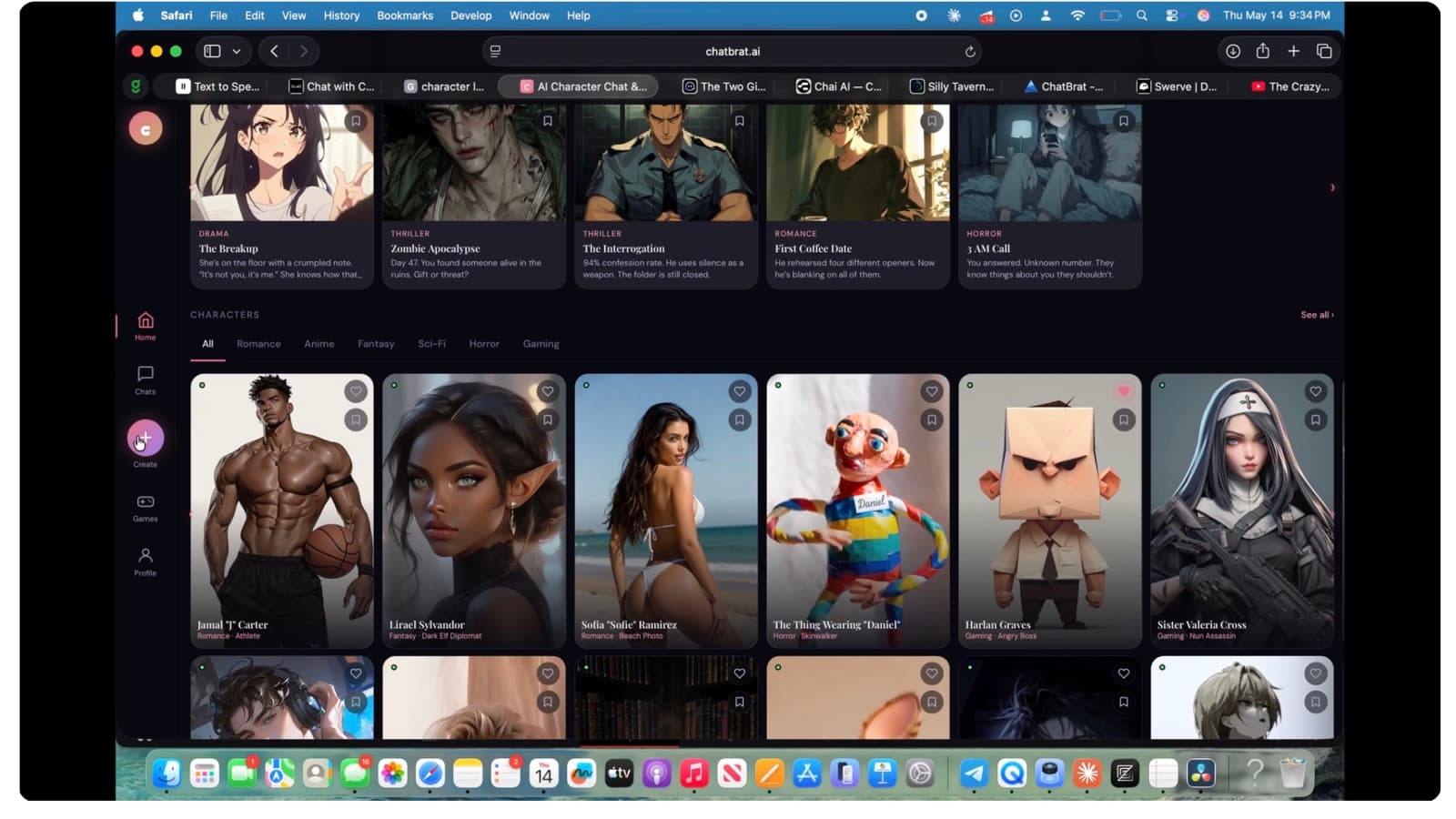

We analyzed all 117 public AI characters in the ChatBrat library and the 565 personality-trait tags attached to them. The single most common trait is warmth, yet it almost never stands alone: the traits that cluster right behind it are guarded, observant, and possessive. The data says people do not want a character who is simply nice. They want warmth with a wall around it, and something worth getting past.
This is the first entry in an ongoing look at our own numbers. Every figure below comes from the live ChatBrat catalog, and you can rebuild a character against these findings in minutes on the character creator.
What is the most common AI character personality trait?
Warmth. Across 117 characters, warm and observant tie as the most frequent traits, each on 7 characters, followed by patient on 6. On its own that looks obvious. The interesting part is what warmth sits next to, and how little any one trait dominates.
How we measured it
We took every character in the public ChatBrat catalog as of August 2026 (117 in total) and counted the behavioral-trait tags on each one. That gave 565 trait tags, of which 456 were unique, for an average of 4.83 traits per character. Where we group traits into families below (warmth, guardedness, intensity, playfulness), that grouping is our own categorization of related labels, and we list the members so you can check the math. No estimates, no rounding tricks. The counts are the counts.
The most common traits
| Trait | Characters | Share of 117 |
|---|---|---|
| warm | 7 | 6.0% |
| observant | 7 | 6.0% |
| patient | 6 | 5.1% |
| protective | 5 | 4.3% |
| precise | 5 | 4.3% |
| possessive | 5 | 4.3% |
| guarded | 5 | 4.3% |
| affectionate | 5 | 4.3% |
Notice the top of the list is a fight between two instincts. Warmth traits (warm, patient, affectionate) share the leaderboard with wary ones (observant, possessive, guarded). That tension is the story.
The warm-but-guarded pattern
Group the related tags and the shape gets clearer. Warmth is the largest family, but guardedness and intensity together outweigh it:
| Trait family | Tag instances | Sample members |
|---|---|---|
| Warmth | 25 | warm, affectionate, patient, gentle, soft-spoken |
| Guardedness | 18 | guarded, watchful, reserved, observant, measured |
| Intensity | 18 | possessive, jealous, protective, passionate |
| Playfulness | 13 | teasing, playful, flirty, dry-humor |
A character built only on warmth reads flat. The library keeps warmth on top and then hangs a guard or an edge on it, so affection has to be earned. That is the exact engine behind the dere types: a mask worn over hidden warmth. The tsundere hides it behind hostility, the kuudere behind cool composure, the yandere behind possession. Our own catalog reaches for the same recipe without being told to.
There is a reason the pattern pulls people in. Media researchers Donald Horton and Richard Wohl described it in 1956 as the parasocial bond, the one-sided closeness an audience feels toward a figure who seems to speak to them directly. A guard that slowly drops turns a flat exchange into a relationship you feel you earned, and that earned closeness is what keeps a chat going past the first night.
The long tail nobody talks about
Here is the number that reframes everything above. Of 456 unique traits, 401 appear on exactly one character. That is 88% of the vocabulary showing up a single time. The top trait sits on just 6% of characters. There is no dominant personality in the data, and that is the point: the strongest characters are specific. Not warm and kind and nice, but dry-humored, precise, and quietly possessive. Specificity is what makes a character feel like a person instead of a template.
Chat with a character built this way



What this means for your character
1. Lead with one clear warmth trait
Warmth is the anchor for a reason. Pick a single warm trait (patient, affectionate, soft-spoken) and make it the character's baseline.
2. Hang a guard on it
Add one guarded or intense trait that the warmth has to fight through: guarded, observant, possessive, proud. This is where the pull comes from. Browse the dere-type guide for ready-made versions of the tension.
3. Then get weird and specific
The long tail is your friend. Add two or three traits nobody else uses. The most memorable characters in the data are the ones with a strange, exact detail. Build yours in the character creator or start from a written roleplay scene.
Put the data to work.
Warm baseline, one guard, a few specifics. Build a character on that formula and see how much longer the conversation runs.
Build your character on ChatBrat →Frequently asked questions
What is the most common AI character personality trait?
How many personality traits should an AI character have?
Why do warm-but-guarded characters work so well?
Where does this data come from?
Want to build one on the formula? Open the creator, browse the anime character library, or read the dere-type guide. Free, in your browser, with memory that sticks.

Garret Williams is the founder and CEO of chatbrat.ai, building at the frontier of AI companions and roleplay chatbots. A Michigan native who attended the UCLA School of Theater, Film and Television (TFT), he directed acclaimed film projects before pivoting to tech, including his TV pilot Self-Care (nominated for Best TV Episodic at the 2023 Mammoth Film Festival) and Eco-Riot (featured on MasterClass). He writes The Bratlog to document the uncharted territory of AI relationships, sharing real-time lessons and tackling the open questions nobody has answered yet.