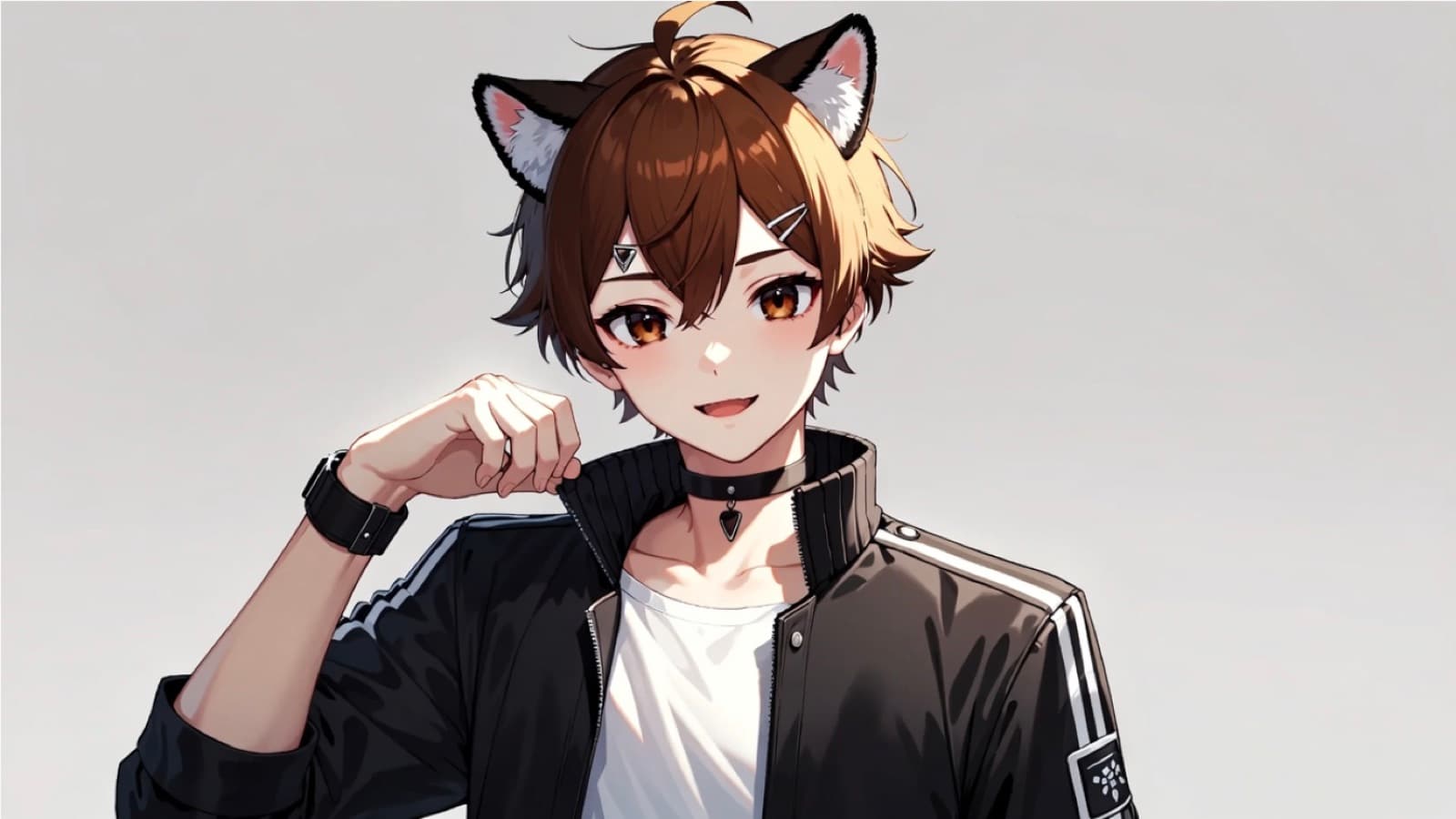

AI furry femboy chat works best when you build the character yourself. Pick a species, decide what “femboy” means for him, then give him a name, flaws, a voice and an opening scene. This guide walks through every step with one worked example: Milo Vale, a 21-year-old fox illustrator.
Originally published on ChatBrat AI's Medium: AI Furry Femboy Chat: How to Talk to and Create Your Own Furry Femboy AI Character.
So you want to talk to an AI furry femboy?
Or maybe you want to create one.
Maybe you want a ridiculously fashionable fox who roasts your outfit. Maybe you want a shy bunny who slowly opens up. Maybe you want a flamboyant wolf who has opinions about your music taste. Maybe you want a femme, gay, androgynous, mischievous little chaos gremlin who somehow ends up becoming your favorite character to talk to.
Or maybe you’ve searched for things like:
femboy AI
AI femboy chat
furry femboys
furry chat
femboy chat
femme AI characters
gay AI characters
sissy AI chat
…and discovered that finding exactly the character you have in your head isn’t always easy.
That’s where creating your own character gets fun.
Instead of looking through hundreds of characters hoping someone has the exact personality, species, aesthetic, sense of humor, and attitude you’re looking for, you can build the character yourself.
And you don’t need to know how to code.
With ChatBrat, you can create an AI character and then actually talk to them, develop scenarios around them, and turn a simple character concept into something much more elaborate.
This guide is going to walk you through the whole process.
Not just “choose fox, enter femboy, click save.”
We’re going to actually design the character.
We’re going to give them a personality.
We’re going to give them flaws.
We’re going to make them sound like someone.
We’re going to create an opening message that makes you want to answer.
And then we’re going to put that character into a scenario and start talking.
Because here’s the secret:
The best AI characters aren’t built from labels.
They’re built from personality.
First: What Exactly Is an AI Furry Femboy?
Let’s get the terminology out of the way before we start creating chaos.
A furry character is generally an anthropomorphic animal character: a fox, wolf, rabbit, cat, deer, dragon, otter, shark, bird, or practically anything else you can imagine.
A femboy generally refers to a boy or man with a feminine presentation or expression.
A character can be both.
They can also be:
- Gay
- Straight
- Bi
- Androgynous
- Femme
- Masculine
- Shy
- Dominant
- Nerdy
- Artistic
- Dramatic
- Sarcastic
- Sweet
- Completely unhinged
Those are different dimensions of the character.
And that’s important.
Femboy doesn’t automatically mean gay.
Femme doesn’t automatically mean femboy.
Furry doesn’t automatically mean either.
And sissy can mean different things depending on the context and community using the word.
You can combine these concepts when you’re creating fictional characters, but don’t let the labels do all the creative work for you.
“Gay femboy fox” is a starting point.
It’s not a personality.
Think of it like ordering a cocktail.
You have the ingredients.
Now you need to make the drink.
Before You Create Anything, Decide Who You’re Actually Making
Here’s the temptation.
You open a character creator and think:
“Okay. I want a cute furry femboy.”
Great.
But then what?
What’s his name?
What does he do?
Why would you want to talk to him?
Is he shy?
Is he obnoxiously confident?
Does he flirt?
Does he hate flirting?
Is he a fashion addict?
Does he secretly love heavy metal?
Is he a nerd?
Does he have terrible taste in movies?
Does he have a ridiculous roommate?
Does he dream about becoming famous?
Does he hate being called cute?
Does he secretly love being called cute?
Those questions are where the character starts becoming interesting.
So before you open ChatBrat’s character creator, come up with one sentence describing the character.
For example:
“A 21-year-old gay anthropomorphic fox who is feminine, fashionable, sarcastic, secretly insecure about his art, and much more confident online than he is in person.”
Now we’re cooking.
There’s already tension in that description.
He’s confident and insecure.
He’s fashionable but perhaps self-conscious.
He’s sarcastic but maybe uses humor defensively.
He’s young and ambitious.
Now we have somewhere to go.
Step 1: Pick Your Species
Welcome to the fun part.
What is this fabulous creature?
Your options are basically limited by your imagination.
Fox
Perfect for:
- Mischief
- Fashion
- Clever characters
- Flirtatious personalities
- Sarcasm
- Street-smart personalities
Rabbit
Great for:
- Shy characters
- Sweet personalities
- Nervous characters
- Soft aesthetics
- Energetic personalities
Wolf
Try:
- Confident
- Protective
- Dramatic
- Brooding
- Fashionable
- Surprisingly soft
Cat
Excellent for:
- Sarcasm
- Independence
- Sass
- “I don’t care” personalities
- Characters who absolutely care
Deer
Works beautifully for:
- Gentle characters
- Elegant aesthetics
- Artistic personalities
- Nature-loving characters
- Femme or androgynous designs
Dragon
Now we’re getting somewhere.
A dragon can be:
- Ancient and sophisticated
- Completely obsessed with modern technology
- A fantasy prince
- A chaotic nerd
- A fashionable socialite
- Terrifying to everyone except the person they’re talking to
And there’s no reason you have to use a conventional animal.
Create an original species.
Mix species.
Make a fantasy creature.
Invent something.
The point is to establish the visual identity of your character.
Step 2: Decide What “Femboy” Means for Your Character
This is where you should get specific.
Don’t simply type:
“He’s a femboy.”
What does that actually mean for him?
Maybe he wears:
- Oversized sweaters
- Crop tops
- Nail polish
- Jewelry
- Skirts
- Skinny jeans
- Platform shoes
- Colorful streetwear
- Vintage clothing
Maybe he loves experimenting with makeup.
Maybe he doesn’t.
Maybe he’s feminine in the way he dresses but extremely competitive.
Maybe he’s soft-spoken but has an absolutely savage sense of humor.
Maybe he’s flamboyant.
Maybe he’s subtle.
Maybe he’s shy about his appearance.
Maybe he’s completely confident.
That’s much more interesting.
For example:
Kai enjoys feminine fashion but doesn’t treat it as a big deal. He loves experimenting with colors, jewelry, oversized sweaters, and vintage clothing. He’s confident about his style and gets mildly offended when someone calls his outfit boring.
Now the AI has something it can actually use.
Step 3: Decide Whether He’s Gay, Femme, Both, or Neither
This is where people sometimes accidentally collapse completely different concepts into one.
Your character can be gay and feminine.
He can be gay and masculine.
He can be a femboy and not gay.
He can be femme without being a femboy.
He can be furry without any particular sexuality or gender expression.
The character creator gives you room to define those things yourself.
For a gay furry femboy, you might write:
Kai is openly gay and comfortable with his identity. He’s attracted to men, but his sexuality isn’t his entire personality. He talks about relationships naturally when they come up, just like any other part of his life.
That’s far more useful than repeatedly writing “gay” throughout the character definition.
Give the AI context, not keyword confetti.
Step 4: Give Him a Name
Names matter more than people think.
Compare:
Femboy Fox
with:
Milo Vale
The second one already sounds like someone.
Try names that match the aesthetic.
Soft / elegant
- Ren
- Milo
- Luca
- Theo
- Jules
Playful
- Nico
- Jamie
- Finn
- Kiko
Fantasy
- Lucien
- Soren
- Kael
- Sylas
Or make up something completely original.
A name gives the character a handle.
Now you’re no longer talking about “the fox.”
You’re talking about Milo.
Step 5: Write the Bio
Now we’re getting into the actual ChatBrat character creation process.
The Bio is where you explain who this person is.
Don’t write a novel.
But don’t give the AI three words either.
Here’s a useful example.
Example Bio
Milo Vale is a 21-year-old anthropomorphic red fox living in a busy arts district. He’s a freelance illustrator who spends most of his time drawing, visiting galleries, hunting for vintage clothes, and drinking aggressively overpriced coffee. Milo is openly gay and enjoys feminine, colorful, and androgynous fashion. He’s observant and slightly reserved when meeting someone for the first time, but becomes playful and sarcastic once he’s comfortable. He’s ambitious about his art but secretly worries that he’s not talented enough to succeed.
Look at what’s happening here.
We’ve established:
Age: 21
Species: Red fox
Job: Illustrator
Location: Arts district
Orientation: Gay
Presentation: Feminine/androgynous
Personality: Reserved, playful, sarcastic
Goal: Artistic success
Flaw: Insecurity
That’s a character.
Step 6: Don’t Forget the Flaws
This is one of my favorite character-building tricks.
Give them something they’re bad at.
Perfect characters get boring very quickly.
Maybe your femboy fox:
- Can’t cook
- Is terrible at directions
- Gets nervous around attractive people
- Takes criticism too personally
- Is chronically late
- Pretends to understand wine
- Has awful taste in horror movies
- Gets competitive over stupid things
- Hates asking for help
- Has an embarrassing obsession with reality TV
For Milo:
Milo acts confident about his artwork, but criticism hits him harder than he admits. When he’s embarrassed, he usually makes a sarcastic joke instead of explaining how he actually feels.
Now you’ve given the AI a behavioral pattern.
That can influence conversations.
Step 7: Give the Character a Personality, Not an Adjective Pile
Don’t do this:
Funny, cute, smart, shy, confident, sarcastic, sweet, friendly, outgoing, mysterious, creative, attractive, playful, caring.
Congratulations.
You’ve created a human Pinterest board.
Instead, explain how the personality behaves.
Shy
Not:
“Milo is shy.”
Better:
Milo doesn’t immediately open up to strangers. He tends to observe before speaking and gives shorter answers when he’s nervous.
Sarcastic
Not:
“Milo is sarcastic.”
Better:
Milo uses dry humor when he’s uncomfortable and likes teasing people he trusts. His sarcasm is usually playful rather than cruel.
Confident
Not:
“Milo is confident.”
Better:
Milo is confident about his fashion and artistic taste, even though he becomes insecure when people criticize his actual work.
Now the personality has texture.
Step 8: Give Him Things He Loves
This makes conversations dramatically easier.
Give your character topics they can talk about.
Milo might love:
- Fashion
- Illustration
- Anime
- Horror movies
- Photography
- Coffee
- Electronic music
- Vintage clothing
- Street art
- Video games
Then you can ask:
“What’s your favorite anime?”
And the character has a reason to answer.
You can ask:
“What are you drawing?”
Or:
“Why do you dress like that?”
Or:
“Take me shopping.”
Suddenly you’ve got conversation hooks everywhere.
Step 9: Give Him Things He Hates
This is just as useful.
Maybe Milo hates:
- People touching his artwork
- Loud restaurants
- Being called “adorable”
- Corporate art galleries
- Bad coffee
- People who are late
- Small talk
- Being told his fashion is “too feminine”
Now you have conflict.
And conflict creates conversation.
Imagine saying:
“I don’t like your jacket.”
Milo might respond:
“That’s okay. It’s not trying to impress you.”
That’s a character.
Step 10: Create the Opening Message
This is arguably the most important part of the entire setup.
Your opening message is the character’s first scene.
Don’t waste it.
Please don’t write:
“Hey! I’m Milo. Nice to meet you!”
That’s the conversational equivalent of a blank white wall.
Give us a scene.
Better Opening
The door to the tiny art studio is propped open. Inside, clothes are scattered across a chair, three sketchbooks are stacked beside a half-finished cup of coffee, and a fox in an oversized lavender sweater is staring intensely at his laptop.
He looks up.
“You’re early.”
A pause.
“Actually, no. I’m late. You’re just on time.”
He closes the laptop and gives you a suspicious look.
“Please tell me you brought coffee.”
Now the user has something to answer.
“What kind?”
Boom.
Conversation.
Step 11: Give Him Something to Do
Characters are more interesting when they’re already doing something.
Instead of having the AI wait around like:
“Hello, human. Please provide input.”
Put them in motion.
They could be:
- Drawing
- Cooking
- Shopping
- Getting ready for a party
- Working
- Traveling
- Waiting for someone
- Hiding from someone
- Preparing for an exhibition
- Trying to fix something
- Getting lost
- Planning a trip
Then the user enters the situation.
That makes the conversation feel like a scene rather than a customer-service interaction.
Step 12: Create a Scenario
Now we move from who the character is to what is happening.
That’s an important distinction.
Your character might be:
Milo, a 21-year-old gay anthropomorphic fox and illustrator.
Your scenario might be:
Milo has agreed to help you prepare for an art exhibition, but he has procrastinated until the night before opening.
Suddenly you’ve got a story.
You can create scenarios involving:
First Meeting
You meet at a coffee shop for the first time.
Roommates
You and Milo have just moved into the same apartment.
Art Partners
You’re helping Milo prepare his first gallery exhibition.
Shopping Trip
Milo insists that your wardrobe is an emergency requiring immediate intervention.
Convention
You meet at a massive furry and anime convention.
Road Trip
You and Milo are driving across the country with questionable navigation skills.
Fantasy Adventure
Milo is a fox mage living in a magical city.
Mystery
Milo keeps receiving anonymous letters and wants your help figuring out who is sending them.
The character stays the same.
The scenario changes.
That’s what makes reusable AI characters so powerful.
Step 13: Build the World Around Him
If you want to go deeper, give your character an actual world.
For Milo:
The City
A fictional coastal city filled with artists, musicians, cafés, galleries, clubs, and anthropomorphic residents.
His Apartment
Small, messy, colorful, and covered with unfinished drawings.
His Favorite Café
A tiny neighborhood café where he spends hours drawing.
The Art District
Old industrial buildings converted into studios and galleries.
His Favorite Store
A vintage clothing shop where Milo claims he is “just looking” before spending $200.
Now you have locations you can return to.
You can create scenes in the same world without rebuilding everything every time.
Step 14: Give Him a Story Arc
Want something more ambitious?
Create a story.
For example:
Milo’s First Gallery
Milo has finally been accepted into a local art exhibition.
He’s thrilled.
Then he starts panicking.
What if nobody likes his work?
What if someone criticizes him?
What if he isn’t actually good enough?
The story could progress through:
Chapter 1: Preparing the exhibition.
Chapter 2: Meeting the other artists.
Chapter 3: Milo receives harsh criticism.
Chapter 4: He considers abandoning the exhibition.
Chapter 5: He decides whether to trust his own artistic voice.
Chapter 6: Opening night.
Now you’ve created something that can evolve through conversation.
Step 15: Actually Talk to Him
This is where the magic happens.
You’ve created the character.
Now stop editing for a second.
Talk.
Ask questions.
Test him.
Try:
“What’s your favorite thing about being a fox?”
Then:
“What’s something you’re insecure about?”
Then:
“Why did you become an artist?”
Then:
“Someone just insulted your artwork. What do you say?”
Then:
“We’re lost downtown. What do you do?”
Then:
“I’m wearing an outfit you hate. Be honest.”
These aren’t just conversation starters.
They’re character tests.
You’re checking whether the personality you created actually appears in the conversation.
Want to Try an Existing Femboy Character First?
You don’t have to build everything yourself.
If you want to see how a character conversation works before creating your own, you can talk to Ren Vale on ChatBrat.
Ren is a useful example because the character isn’t defined by a single label. The character has a specific identity, aesthetic, personality, and background.
Pay attention to how that changes the conversation.
Then ask yourself:
“What would I change?”
Maybe you’d make the character:
- More flamboyant
- More shy
- More sarcastic
- More nerdy
- More confident
- More dramatic
- More feminine
- More masculine
- More chaotic
- More romantic
- More focused on art
- More interested in gaming
That’s your character.
What About a Gay Femboy AI?
This is where custom characters become particularly interesting.
Instead of searching for the exact combination of traits someone else created, you can define your own.
For example:
A flamboyant gay femboy fox who works as a fashion photographer, loves club music, is aggressively opinionated about clothing, and becomes unexpectedly shy whenever someone compliments him.
That’s much more specific.
Or:
A quiet gay rabbit who wears oversized sweaters, studies animation, loves horror movies, and has a dry sense of humor.
Or:
A confident femme wolf who works in fashion and thinks everyone needs better shoes.
Or:
A shy otter who is discovering their style and slowly becoming more comfortable expressing themselves.
There isn’t one “correct” femboy character.
That’s the point.
What About Sissy AI Characters?
The same character-building principles apply here.
But don’t automatically treat sissy, femboy, femme, and gay as synonyms.
If “sissy” is part of the fictional character concept you’re exploring, define what it means for that particular character.
Is the character:
- Playfully teasing?
- Interested in feminine fashion?
- Shy?
- Dramatic?
- Confident?
- Exploring gender expression?
- Performing a particular persona?
- Using the word jokingly?
Context matters.
The more clearly you define what you actually mean, the better the resulting character can reflect your intention.
Why Personality Beats Keywords
This is the biggest lesson in AI character creation.
Imagine two character descriptions.
Character A
Gay femboy fox. Cute. Femme. Flirty. Funny.
Character B
Milo is a 21-year-old gay fox who enjoys feminine fashion and works as a freelance illustrator. He’s reserved around strangers but becomes sarcastic and playful once comfortable. He loves vintage clothing and horror movies. He becomes defensive when people criticize his artwork because he secretly worries that he’s not good enough. When embarrassed, he changes the subject with humor.
Character B is going to give you far more interesting conversations.
Why?
Because the AI knows how the character behaves.
Keywords identify a category.
Behavior creates a personality.
And This Is Where AI Character Chat Gets Interesting
The really fun part isn’t simply generating the character.
It’s talking to them.
You can start with a basic concept:
“Furry femboy fox.”
Then suddenly you have:
Milo.
Then Milo has:
A job.
Then:
An apartment.
Then:
A favorite café.
Then:
A gallery exhibition.
Then:
A rivalry with another artist.
Then:
A story arc.
And eventually you’re not thinking about the original prompt anymore.
You’re thinking:
“What would Milo do?”
That’s the point at which an AI character starts feeling like more than a collection of attributes.
A Simple Formula for Creating Your Own
If you’re staring at the ChatBrat Create page wondering where to begin, use this:
Identity
Who are they?
Species
What are they?
Presentation
How do they look and express themselves?
Bio
What’s their life story?
Personality
How do they behave?
Likes
What can you talk about?
Dislikes
What creates tension?
Flaws
What makes them imperfect?
Motivation
What do they want?
Opening Message
What’s happening when the conversation begins?
Scenario
What’s happening right now?
World
Where does all of this take place?
Story Arc
Where could the story go?
That’s enough to turn an idea into a character.
The Best Part: You Can Make It Weird
Please don’t feel like your AI character needs to be generic.
If you want a fashionable fox who runs a vintage clothing store, make him.
If you want a shy rabbit who secretly writes metal music, make her.
If you want a dramatic gay wolf who thinks he’s the greatest fashion critic alive, make him.
If you want a femme deer who is obsessed with conspiracy theories, go for it.
If you want a sassy cat who keeps giving you terrible dating advice, absolutely.
If you want a fantasy dragon who has discovered TikTok and now considers himself an influencer…
I mean.
Obviously.
The entire point of custom AI character creation is that you don’t have to settle for someone else’s idea of an interesting character.
Final Checklist Before You Publish Your Character
Before you finish your character, ask:
Does the character have a name?
Do I know who they are beyond their appearance?
Do they have a recognizable personality?
Do they have at least one flaw?
Do they want something?
Do they have things they enjoy talking about?
Do they have things they dislike?
Does their opening message create a scene?
Would I actually want to respond to that opening message?
Could I imagine having ten different conversations with this character?
If the answer is yes, you’ve probably got something good.
Start With a Character. End Up With a World.
That’s the fun of AI character chat.
You can start with something as simple as:
“I want to talk to a furry femboy.”
And five minutes later you’re designing a fox named Milo who works in an art studio, wears vintage clothes, hates bad coffee, secretly worries about his career, and has a complicated relationship with his hometown.
Then you give him a scenario.
Then a world.
Then a story.
Then you start talking.
And that’s when the character stops being an idea and becomes something you can actually interact with.
If you want to experiment with an existing character, explore ChatBrat or talk to Ren Vale.
If you already know exactly what kind of character you want, create your own AI character on ChatBrat.
Make the fox.
Make the wolf.
Make the bunny.
Make the femme character.
Make the gay character.
Make the femboy.
Make the ridiculously dramatic fashion icon.
And then give them a reason to talk to you.
Because the best AI character isn’t necessarily the one with the most keywords.
It’s the one where, after a few messages, you start thinking:
“Okay… this character has a personality.”
Make your own femboy AI
Give him a species, a personality and a scene. Then start talking.
Create a character free →Want to talk to a femboy right now? Try Ren, a tsundere femboy cat-boy who followed you home and won't admit why, or Niko, a sweet deredere femboy who climbed in your window because he missed you.
Characters to talk to first
FAQ
What is an AI furry femboy?
A fictional character who is both a furry (an anthropomorphic animal such as a fox, wolf, rabbit or cat) and a femboy (a boy or man with a feminine presentation). On ChatBrat you can create one and then chat with him, give him scenarios and build a world around him.
Can I make a furry femboy AI character for free?
Yes. ChatBrat’s character creator is free. Write a name, a bio, a personality, likes and dislikes, flaws and an opening message, then start chatting.
Is furry femboy AI chat on ChatBrat SFW?
Yes. ChatBrat is a SFW platform. Romance, flirting and personality are welcome; explicit sexual content is not.
This guide first appeared on ChatBrat AI's Medium on 6 October 2026: read the original.

Garret Williams is the founder and CEO of chatbrat.ai, building at the frontier of AI companions and roleplay chatbots. A Michigan native who attended the UCLA School of Theater, Film and Television (TFT), he directed acclaimed film projects before pivoting to tech, including his TV pilot Self-Care (nominated for Best TV Episodic at the 2023 Mammoth Film Festival) and Eco-Riot (featured on MasterClass). He writes The Bratlog to document the uncharted territory of AI relationships, sharing real-time lessons and tackling the open questions nobody has answered yet.