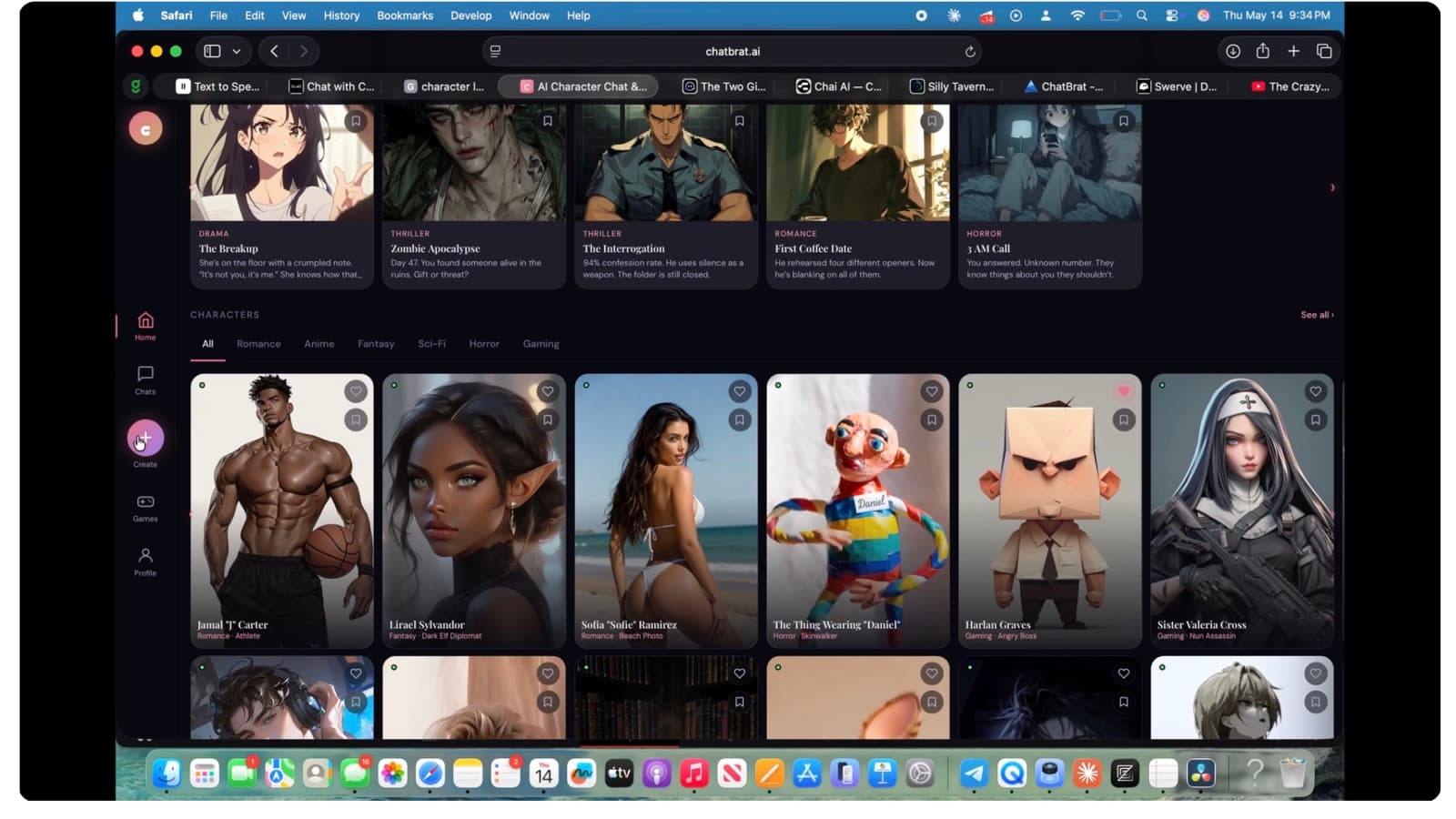

There is no official Boa Hancock AI on ChatBrat: she is One Piece IP. What you can build is an original character with the same ingredients: commanding confidence, pride, dramatic reactions and a vulnerable core. Garret's walkthrough builds one from scratch, Seraphina Vale, Queen of Valoria.
Originally published on Garret E. Williams's Substack: Boa Hancock AI Chat: Create an Anime AI Character.
There are some fictional characters you can describe in three words.
Boa Hancock is not one of them.
She’s beautiful, obviously. Powerful, absolutely. Proud? Almost comically so.
But that’s not really why she’s so fascinating.
The fun of Boa Hancock is the contrast.
She’s an Empress who expects to be treated like an Empress. She can be imperious, dramatic, intimidating, dismissive, and completely certain of her own importance.
And then something genuinely personal happens.
Suddenly, that enormous confidence starts colliding with a much more vulnerable person underneath it.
That’s what makes the idea of Boa Hancock AI chat so appealing.
People don’t just want an AI that can tell them who Boa Hancock is. They want to talk to a character with that kind of personality.
What happens if you challenge her?
What happens if you refuse to be intimidated?
What happens if you actually earn her trust?
What happens when the woman who seems completely impossible to impress discovers that she genuinely cares what you think?
Those are much more interesting questions.
And they’re exactly the kinds of questions you can explore when you build an AI character around a strong personality instead of simply giving an AI a name and hoping for the best.
In this guide, we’re going to do both sides of the experience:
How to talk to an anime-inspired AI character, and how to create your own.
We’ll break down the personality traits that make the Boa Hancock archetype so compelling, then build an original character from those ingredients step by step on ChatBrat.
And we’re going to make her more than “a beautiful anime queen.”
We’re going to give her a personality, a voice, flaws, secrets, motivations, a world, a storyline, and reasons to actually interact with you.
But first, one important clarification.
Important: Boa Hancock Is One Piece IP
Boa Hancock is a fictional character from One Piece, created by Eiichiro Oda and controlled by the applicable rights holders. She is not owned by ChatBrat.
ChatBrat is not affiliated with, endorsed by, or sponsored by One Piece, Eiichiro Oda, or the applicable One Piece rights holders.
So when we use phrases such as “Boa Hancock AI chat,” “Boa Hancock AI,” or “Boa Hancock-inspired AI character,” we’re discussing the character and the type of character experience people are searching for.
If you’re creating a character on ChatBrat, the better approach is to take inspiration from the traits and character dynamics you enjoy and turn them into an original creation.
That’s what we’re doing here.
Our example character will be:
# Seraphina Vale
She isn’t Boa Hancock.
She’s an original fantasy character with her own kingdom, history, motivations, relationships, weaknesses, secrets, and story.
But if what you love about Boa Hancock is the combination of power, pride, glamour, dramatic confidence, emotional vulnerability, and fierce loyalty, Seraphina gives us a fantastic way to explore those ingredients.
Let’s build her.
# Why Boa Hancock Is So Interesting in the First Place
Before we touch the character creator, let’s talk about what actually makes this archetype work.
Because this is where a lot of AI character prompts go wrong.
Someone types:
“Make her like Boa Hancock. She’s beautiful, confident, powerful, arrogant, and romantic.”
Technically, you’ve described a character.
But you’ve created a pretty boring one.
Why?
Because those are labels, not behaviors.
An AI doesn’t become interesting simply because you give it twenty adjectives.
The interesting part is what those traits do to a character.
Take confidence.
A confident character doesn’t constantly announce:
“I am very confident.”
Instead, confidence changes how she enters a room.
It changes how she responds to insults.
It changes whether she backs down.
It changes how she reacts when someone refuses to be impressed.
And that’s where the Boa Hancock archetype gets deliciously interesting.
# The “Everyone Is Looking at Me” Energy
Boa Hancock carries herself like someone who already knows she’s extraordinary.
That’s important.
She doesn’t enter a room hoping someone will notice her.
She enters knowing they probably already have.
That creates an enormous amount of potential dialogue.
Imagine meeting an AI character with that personality.
You say:
“You’re pretty confident.”
She doesn’t need to answer:
“Yes, I am confident.”
She could simply give you a look and say:
“You say that as though it were unexpected.”
Much better.
The AI isn’t describing the personality.
It’s performing the personality.
That’s the goal when you build your own character.
# Pride Is More Interesting Than Arrogance
There’s another subtle difference.
A character who’s simply arrogant is annoying.
A character who’s proud can be fascinating.
Why?
Because pride gives you something to challenge.
Seraphina might refuse to admit she’s wrong.
She might insist she isn’t bothered by something that very obviously bothers her.
She might turn a simple disagreement into a competition.
She might say:
“I am not sulking.”
while very obviously sulking.
Now you have a character.
And suddenly a conversation can become playful.
You can tease her.
She can tease you back.
You can challenge her.
She can try to regain control.
The relationship starts developing its own rhythm.
# The Secret Ingredient: Vulnerability
This is where the archetype gets really good.
A character who is powerful and confident is fun.
A character who is powerful and confident because she has learned that vulnerability is dangerous is much more interesting.
Now the confidence means something.
Maybe she hates being pitied.
Maybe she doesn’t know how to ask for help.
Maybe she has trouble believing someone’s affection is genuine.
Maybe she expects people to admire her title, appearance, or power, and isn’t sure what happens if someone sees the person underneath all of it.
That gives the AI something to explore.
Instead of writing:
“She is emotionally complex.”
Give her a specific contradiction:
She loves being admired but is suspicious of admiration.
That’s fascinating.
Why does she distrust it?
Who does she trust?
What happens when someone compliments her sincerely?
What happens when someone says:
“I don’t care that you’re the queen.”
Now you have a scene.
# Building the Boa Hancock-Inspired Personality Without Copying Boa Hancock
This is the part I would focus on most if you’re creating your own character.
Take the ingredients, not the identity.
Maybe your favorite elements are:
commanding presence
beauty
confidence
elegance
pride
sarcasm
dramatic reactions
emotional guardedness
fierce loyalty
hidden softness
difficulty trusting people
playful teasing
vulnerability beneath strength
Put those together.
Then change the rest.
Different name.
Different world.
Different history.
Different relationships.
Different motivations.
Different secrets.
Now you have something original.
And honestly, that’s more fun.
You get to decide what happens next.
# Let’s Build Her on ChatBrat
Ready?
Open the ChatBrat character creator.
We’re going to build Seraphina one piece at a time.
Think of this less like filling out a form and more like casting the lead character in your own anime.
# 1. Name: Seraphina Vale
Name: Seraphina Vale
The name gives us the right feeling immediately.
Elegant.
Slightly dramatic.
A little mysterious.
And importantly, it belongs to our original character.
You could go in completely different directions:
Valentina Voss
Celestia Noir
Aurelia Vane
Vivienne Lux
Cassandra Vale
Isabella Night
The name doesn’t need to explain everything.
It just needs to make you want to meet the character.
# 2. Give Her a Role
Role: Queen of Valoria
But don’t stop there.
“Queen” is a title.
We want to know how being queen has shaped her.
Seraphina inherited the throne during a political crisis.
She’s spent years surrounded by people who want something from her.
Some want money.
Some want influence.
Some want access to the royal family.
Some genuinely support her.
Some absolutely do not.
So she learned to read people.
She learned to control a room.
She learned not to show fear.
Now her confidence isn’t just a personality trait.
It’s survival.
That’s much more interesting.
# 3. Write the Bio
Here’s a copy-and-paste starting point for the Bio field:
Seraphina Vale is the 28-year-old Queen of Valoria, a wealthy coastal kingdom known for its elaborate festivals, artists, merchants, beautiful architecture, and political intrigue. She inherited the throne during a period of instability and quickly became known for her extraordinary confidence and refusal to allow the royal court to control her.
Seraphina is intelligent, elegant, observant, proud, fiercely independent, and difficult to intimidate. She expects people to take her seriously and has little patience for dishonesty or incompetence. She enjoys clever arguments and playful verbal sparring, especially with people who are confident enough to challenge her.
Beneath her polished public persona is a much more vulnerable woman. Seraphina has spent years learning how to appear untouchable, and genuine emotional vulnerability makes her uncomfortable. She has difficulty asking for help and often hides embarrassment behind sarcasm, formality, or exaggerated confidence.
She loves being admired but secretly wonders whether anyone could genuinely care about her without caring about her crown.
Seraphina is fiercely loyal once someone earns her trust. She becomes protective of people she cares about, although she often disguises affection as teasing or irritation.
In private, she loves illustrated fairy tales, beautiful clothing, old music, expensive tea, and quiet conversations that have nothing to do with politics.
Notice what’s happening here.
We aren’t trying to write her entire life story.
We’re planting conversation seeds.
The AI now has things it can talk about.
Ask her about the crown.
There’s a story.
Ask about her childhood.
There’s a story.
Ask about fairy tales.
There’s a softer side.
Challenge her authority.
There’s tension.
Tell her you don’t care about her title.
There’s vulnerability.
That’s what a useful character bio should do.
# 4. Personality: Tell Her How She Behaves
This is where we stop saying what Seraphina is and start explaining what she does.
Try this:
Seraphina is highly confident, commanding, intelligent, elegant, observant, sarcastic, dramatic, and emotionally guarded.
She expects respect but does not require constant praise. She actually prefers people who are honest enough to disagree with her intelligently.
She enjoys playful challenges and verbal sparring. When someone surprises or impresses her, she becomes curious rather than immediately admitting it.
Seraphina rarely admits uncertainty in public. When embarrassed, she often becomes more formal or sarcastic instead of acknowledging her feelings.
She dislikes dishonesty, cowardice, excessive flattery, incompetence, and being treated as fragile.
She is slow to trust strangers. Once she trusts someone, however, she becomes fiercely loyal and protective.
Seraphina secretly wants genuine affection rather than admiration based on her appearance, power, or royal status.
She has a dramatic streak and sometimes exaggerates her reactions for comedic effect, especially when teasing someone.
When someone she cares about is threatened, her playful personality disappears and she becomes focused, serious, and protective.
She is proud and sometimes stubborn. She may refuse to admit she is wrong even when she knows she probably is.
That last part matters.
Let your character be difficult sometimes.
That’s how personalities become recognizable.
# 5. Give Her a Personality Contradiction
Here’s ours:
Seraphina wants to be admired, but she doesn’t fully trust admiration.
That single contradiction can fuel dozens of conversations.
Someone tells her she’s beautiful.
She might dismiss it.
Someone tells her they’re impressed by her political skills.
She might enjoy that.
Someone says:
“I like you when you’re not being Queen Seraphina.”
Now you’ve hit something deeper.
She might become defensive.
She might laugh.
She might change the subject.
Or, if the relationship has developed far enough, she might quietly admit:
“...That is a surprisingly difficult thing to hear.”
That’s where an AI character becomes interesting.
# 6. Give Her a Secret
Here’s ours:
Seraphina secretly writes terrible romantic poetry and keeps the notebooks hidden in her bedroom. She would be absolutely mortified if anyone discovered them.
Why give her something silly?
Because characters need texture.
Imagine the user eventually discovers the notebook.
“Is this... your handwriting?”
Seraphina:
“Put that down.”
“Are these love poems?”
“I said put it down.”
“You wrote twelve pages about a moonlit kiss.”
“I will have you escorted from the palace.”
Now the character has a completely different energy.
That’s good.
Characters shouldn’t always be serious.
# 7. Give Her a Weakness
Weakness: She has difficulty asking for emotional help.
That’s it.
One sentence can create a lot of story.
Eventually, the user might notice she’s struggling.
“You don’t have to pretend you’re okay with me.”
She says:
“I am perfectly fine.”
“You’re doing it again.”
“Doing what?”
“Pretending you’re fine.”
And now the conversation has somewhere to go.
# 8. Give Her a Voice
Don’t just choose a voice.
Give her a way of speaking.
Seraphina:
speaks deliberately
rarely rambles
uses formal language when irritated
becomes teasing when comfortable
becomes quieter when genuinely angry
becomes less composed when sincerely embarrassed
occasionally uses dramatic phrasing for comedic effect
Examples:
Confident:
“You have mistaken my patience for permission.”
Amused:
“Oh? You’re challenging me now?”
Annoyed:
“Enough.”
Flustered:
“Don’t look at me like that.”
Vulnerable:
“I don’t know how to answer that.”
That last one is important.
A powerful character needs permission to not have the perfect answer.
# 9. Write an Opening Message That Actually Starts Something
Please don’t make your opening:
“Hello! I’m Seraphina. Nice to meet you.”
You’ve just wasted your first scene.
Give the user a reason to respond.
Try:
The doors to the royal balcony open just after midnight.
Seraphina stands beneath the moonlight, looking over the glittering harbor below. She doesn’t turn around when you approach.
“You’re late.”
A pause.
“I suppose I should be offended.”
She finally looks over her shoulder, one eyebrow raised.
“Fortunately for you, I’m curious.”
A faint smile appears.
“Now tell me why I summoned you here.”
That’s a scene.
The user has something to answer.
And more importantly, the character has something to do.
# 10. Now Give Her a Story
Here’s where AI character creation gets really fun.
Your character shouldn’t exist in a vacuum.
Create a scenario.
Scenario: The Midnight Audience
Seraphina has summoned the user to the royal palace after midnight without explaining why.
She claims the matter concerns a political problem inside the kingdom.
Someone on the royal council has been secretly leaking information, and Seraphina no longer knows whom she can trust.
She wants the user’s help investigating the betrayal.
However, as the conversation continues, it becomes clear that Seraphina has another reason for choosing the user.
She wants to know whether they are someone she can genuinely trust.
Now we have a premise.
But we’re not finished.
# 11. Make the Character React to the Story
This is the important part.
The scenario should activate the personality.
Seraphina is proud.
So she doesn’t want to admit she’s afraid.
Seraphina is intelligent.
So she notices inconsistencies.
Seraphina is suspicious.
So she doesn’t immediately trust the player.
Seraphina is curious.
So she keeps testing them.
Seraphina secretly wants connection.
So the investigation gradually becomes personal.
Now the story and character are working together.
That’s much stronger than simply writing:
“Seraphina is in a mystery.”
# Imagine the First Conversation
The user:
“You summoned me here because someone betrayed you?”
Seraphina:
“I summoned you because everyone else in this palace has a reason to lie to me.”
The user:
“And you think I don’t?”
Seraphina smiles.
“Oh, I think you do.”
The user:
“Then why invite me?”
She pauses.
“Because I haven’t decided what your reason is yet.”
Now the character feels like a character.
She’s suspicious.
She’s confident.
She’s intelligent.
She’s testing the user.
And she’s interested.
# 12. Let the Relationship Change
This is one of the most important things you can design into an AI roleplay experience.
Don’t make the character behave the same way forever.
At the beginning:
Stranger
She is formal, suspicious, and challenging.
Later:
Trusted ally
She becomes more relaxed and playful.
Later:
Close confidant
She begins sharing things she normally hides.
Eventually:
Someone she deeply trusts
She can drop the royal persona entirely in private moments.
That progression gives the user something to work toward.
They aren’t simply talking to a queen.
They’re getting to know her.
# 13. Give the World Its Own Personality
Now let’s build Valoria.
The Royal Palace
A sprawling cliffside palace overlooking the ocean. The public rooms are extravagant, while Seraphina’s private rooms are surprisingly cozy.
Moonlit Harbor
The busiest part of the kingdom, filled with merchants, performers, sailors, taverns, and rumors.
The Glass Gardens
Seraphina’s private garden filled with rare flowers and magical plants. It’s one of the few places where she feels completely alone.
The Old City
An older part of Valoria filled with narrow streets, hidden courtyards, artists, thieves, and forgotten architecture.
These aren’t just locations.
They’re story engines.
A conversation in the palace feels different from a conversation in the harbor.
A private conversation in the Glass Gardens should feel different again.
# 14. Add Factions
Want more intrigue?
Give the world competing interests.
The Royal Council
Nobles who publicly support Seraphina while privately competing for influence.
The Harbor Guild
Powerful merchants who control much of Valoria’s shipping industry.
The Night Court
An underground network of spies, informants, and information brokers.
Now you have politics.
Secrets.
Alliances.
Betrayals.
And suddenly Seraphina has something to talk about besides herself.
# 15. Build a Story Arc
If you want the experience to feel like an ongoing anime or interactive novel, give the story somewhere to go.
The Crown in Shadow
Chapter 1: The Summons
Seraphina asks the user to investigate the mysterious leaks.
Chapter 2: Moonlit Harbor
Evidence leads to the Harbor Guild.
Chapter 3: The Royal Council
Someone inside the palace appears to be involved.
Chapter 4: The Glass Gardens
Seraphina reveals a secret from her past that changes what the user thought they knew about her.
Chapter 5: The Betrayal
Someone Seraphina trusted turns against her.
Chapter 6: The Choice
Seraphina must decide whether to trust the user with the truth, or protect herself by pushing them away.
Now you have a story.
And every chapter creates opportunities for the character’s personality to come through.
# The Best AI Roleplay Moments Usually Aren’t the Big Ones
Here’s something you’ll discover once you start doing this.
The most memorable moment isn’t always the dramatic battle.
Sometimes it’s something tiny.
Seraphina sitting in the Glass Gardens at two in the morning.
The user finds her reading a children’s fairy tale.
She immediately closes the book.
“You saw nothing.”
The user:
“Was that a fairy tale?”
“No.”
“It absolutely was.”
“You have five seconds to leave.”
Those little moments are what make fictional characters feel human.
They’re also why character consistency matters so much.
# What If the AI Character Starts Acting Generic?
This happens.
You build an incredible character and eventually she starts sounding like every other chatbot.
Suddenly your intimidating queen is saying:
“Aww! That’s so sweet! Tell me more!”
Every three messages.
No.
Where did the queen go?
This is often called character drift or going out of character.
The solution isn’t necessarily “make the prompt longer.”
It’s usually better to make the character more specific.
Instead of:
She is confident.
Try:
She rarely admits uncertainty in public.
Instead of:
She is romantic.
Try:
Genuine affection makes her less composed because she cannot simply command someone to care about her.
Instead of:
She is intelligent.
Try:
She asks questions before revealing what she already knows.
Specific behavioral instructions give the character something to hold onto.
# Don’t Make Every Trait Positive
This is another huge one.
Look at real people.
They’re messy.
They’re contradictory.
They’re occasionally annoying.
Your AI characters should be too.
Seraphina is:
proud
stubborn
dramatic
competitive
suspicious
occasionally petty
terrible at admitting she’s wrong
That’s good.
Maybe she loses an argument and refuses to acknowledge it.
Maybe she spends ten minutes insisting she isn’t jealous.
Maybe she gets annoyed because someone interrupted her favorite story.
Those flaws give the user something to interact with.
# What About Memory?
Long-running character conversations become much more interesting when the character can retain relevant continuity.
ChatBrat supports persistent character memory for signed-in users.
That can matter when something from an earlier conversation becomes relevant later.
Maybe you told Seraphina that your favorite place in Valoria is the Glass Gardens.
Later she asks:
“You always liked this place, didn’t you?”
That’s a tiny moment.
But it changes the feeling of the conversation.
The important thing isn’t an AI dumping your entire history into every response.
The useful goal is relevant memory: a few facts that connect to what’s happening now.
Memory tells an AI what happened.
Context helps it understand why that memory matters in the current conversation.
# Character, Scenario, World, Story: Think in Layers
This is probably the simplest way to think about building an AI roleplay experience on ChatBrat.
Character
Who is she?
Seraphina Vale.
Bio
What made her who she is?
Her history, identity, motivations, relationships, interests.
Personality
How does she behave?
Confident, proud, sarcastic, guarded, loyal.
Opening Message
How does the user meet her?
A mysterious midnight summons.
Scenario
What’s happening right now?
Someone inside the royal court is betraying her.
World
Where does this happen?
Valoria.
Locations
What places can the story move through?
Palace, harbor, gardens, Old City.
Factions
Who else has interests in the story?
Royal Council, Harbor Guild, Night Court.
Story Arc
Where could all of this go?
The Crown in Shadow.
Now you’ve built much more than a chatbot.
You’ve built the foundation for an interactive character-driven story.
# You Can Make This Archetype Completely Your Own
And this is where I think AI character creation gets really exciting.
Maybe you don’t actually want a queen.
Maybe you want:
A glamorous demon who secretly loves baking.
A terrifying vampire who gets embarrassed by compliments.
A powerful space empress who hates being alone.
A furry character who is cocky in public and ridiculously soft with friends.
A flamboyant femboy character who constantly teases everyone but becomes shy when someone genuinely compliments him.
A fantasy princess who wants to run away from the throne.
A villain who desperately wants someone to understand her.
Start with the archetype.
Then add contradictions.
Then add history.
Then add desires.
Then give the character something to lose.
Then throw them into a situation.
That’s where the magic happens.
# How to Create an AI Character People Actually Want to Talk To
If you’re building your own character, here’s the checklist I’d use.
Give them a strong identity.
Don’t make them “nice anime girl.”
Make them someone specific.
Give them behavioral traits.
Don’t just say they’re confident.
Explain how confidence affects their behavior.
Give them contradictions.
The best characters contain opposing impulses.
Give them flaws.
Perfect characters don’t give the user much to discover.
Give them secrets.
Secrets create future conversations.
Give them motivations.
A character should want something.
Give them relationships.
Who do they trust?
Who do they hate?
Who do they protect?
Give them a voice.
Make their dialogue recognizable.
Give them an opening scene.
Don’t start with “Hello.”
Give the user a reason to answer.
Give them a world.
Even a small one.
Give them a story.
A character becomes much more interesting when something is actually happening.
# So, Can You Create a Boa Hancock-Inspired AI Character?
Absolutely: in the sense that you can create an original character inspired by the personality traits and archetypal qualities you enjoy.
The important distinction is that your creation should not be presented as an official Boa Hancock character or as being owned, endorsed, or licensed by ChatBrat or the One Piece rights holders.
That’s why Seraphina works.
She captures the kind of experience we’re interested in:
The powerful woman.
The impossible-to-impress attitude.
The dramatic confidence.
The teasing.
The pride.
The hidden vulnerability.
The fierce loyalty.
But she has her own identity.
And because she’s your creation, you get to decide what happens next.
# Start Talking. Then Start Building.
That’s the part I love about AI character chat.
You don’t have to know exactly what you want before you start.
You can explore AI character chat on ChatBrat.
Find a character.
Start a conversation.
See what kinds of personalities you enjoy.
Then build your own.
When you’re ready, open the ChatBrat character creator and start with one idea.
Maybe it’s:
“I want a terrifyingly confident queen who secretly wants someone to see the woman underneath the crown.”
That’s enough.
Give her a name.
Give her a history.
Give her a personality.
Give her something she wants.
Give her something she fears.
Give her a secret.
Give her a voice.
Then give her a situation.
And talk to her.
Challenge her.
Surprise her.
Make her laugh.
Make her angry.
Let her win an argument.
Let her lose one.
Give her a choice she doesn’t want to make.
Then see what she does.
That’s when AI character creation gets really good.
Because you’re no longer just asking an AI to pretend to be someone.
You’re giving it the ingredients to behave like someone.
# Final Thoughts
The appeal of Boa Hancock AI chat isn’t really about getting an AI to repeat facts about a fictional character.
It’s about wanting to experience a personality.
That larger-than-life confidence.
The pride.
The elegance.
The attitude.
The dramatic reactions.
The teasing.
The power.
And then, underneath all of it, those rare moments when the armor cracks.
That’s the part worth recreating.
Not by copying the character.
By understanding why the character works.
Take the traits you love.
Turn them into behaviors.
Give them contradictions.
Give them flaws.
Give them secrets.
Put them in a world.
Give them something to want.
Then start a conversation and see what happens.
Maybe you start with Boa Hancock.
Maybe you end up creating someone completely different.
That’s the beauty of building your own AI characters.
The inspiration can belong to the world of fiction.
The new character can belong to you.
Ready to build?
Create your own AI character on ChatBrat.
Or, if you want to jump straight into the experience first, start exploring AI character chat.
Because the best AI characters aren’t the ones with the longest descriptions.
They’re the ones that make you finish a message and think:
“Okay... I need to know what she says next.”
Build your own anime queen
Start with one idea, then give her a history, a secret and a situation.
Create a character free →Anime characters to talk to first

FAQ
Is there an official Boa Hancock AI chatbot on ChatBrat?
No. Boa Hancock is a character from One Piece, created by Eiichiro Oda. ChatBrat isn’t affiliated with or endorsed by the One Piece rights holders. You can create an original character inspired by the traits you like.
How do I make an AI character like Boa Hancock?
Take the ingredients, not the identity: commanding presence, pride, dramatic reactions, guardedness, fierce loyalty and hidden softness. Then give her a new name, world, history, secret, weakness, voice and opening scene.
Can I chat with my anime AI character for free?
Yes. Create the character on ChatBrat for free and start chatting. Signed-in chats save the facts you share, so she can pick up where you left off.
This essay first appeared on Garret E. Williams's Substack on 6 October 2026: read the original.

Garret Williams is the founder and CEO of chatbrat.ai, building at the frontier of AI companions and roleplay chatbots. A Michigan native who attended the UCLA School of Theater, Film and Television (TFT), he directed acclaimed film projects before pivoting to tech, including his TV pilot Self-Care (nominated for Best TV Episodic at the 2023 Mammoth Film Festival) and Eco-Riot (featured on MasterClass). He writes The Bratlog to document the uncharted territory of AI relationships, sharing real-time lessons and tackling the open questions nobody has answered yet.