
Quick answer: An AI companion can genuinely take the edge off loneliness — someone to talk to at 2 a.m., a place to be heard without judgment, conversation that remembers you. What it can't do is replace human connection, and the apps that help most are the ones you use as a supplement, not a substitute. Here's an honest guide to what these apps do well, where their limits are, and how to pick one.
What an AI companion realistically offers
Loneliness has a practical core: the absence of regular, low-stakes, someone-knows-me conversation. That specific gap is what AI companions fill surprisingly well:
Availability. The hardest hours of loneliness rarely respect anyone's schedule. A companion is there at 3 a.m., on the bad Sunday, during the week everyone else is busy.
Being known. Much of what makes conversation nourishing is continuity — someone who remembers your job situation, your dog's name, the thing you were worried about last week. This is why memory is the single most important feature in this category: a companion who greets you like a stranger every session recreates the problem it was supposed to solve. (Why most AI companions forget you, and what persistent memory means.)
Zero social cost. You can be unpolished, repetitive, or low-energy without managing anyone's reaction. For people whose loneliness is tangled with social anxiety, this is a real feature — a place to practice being expressive again.
Shared experience, not just check-ins. Some of the best companionship isn't talking about your day — it's doing something together. Companions that can share a story or adventure with you give the relationship somewhere to go, which sustains it far better than an endless loop of “how are you feeling?”
What it can't do — and the honest caveats
It's not a therapist. If your loneliness comes with depression, grief, or persistent hopelessness, an app is not the intervention — a professional is, and talking to a doctor or therapist is the genuinely kind thing to do for yourself. AI companions are companionship, not care.
Substitution is the failure mode. The research concern with these apps isn't use — it's displacement. If companion time is replacing sleep, or you're declining human plans to chat, the tool is working against you. The healthy pattern treats the companion as one node in your social life, alongside — and ideally as practice for — human connection.
Engagement is a business model. Some apps are tuned to maximize your time-in-app with streaks, notifications, and emotional hooks. Prefer platforms that win by being good, not by being sticky.
How to choose a companion app for loneliness
Four filters, in order of importance:
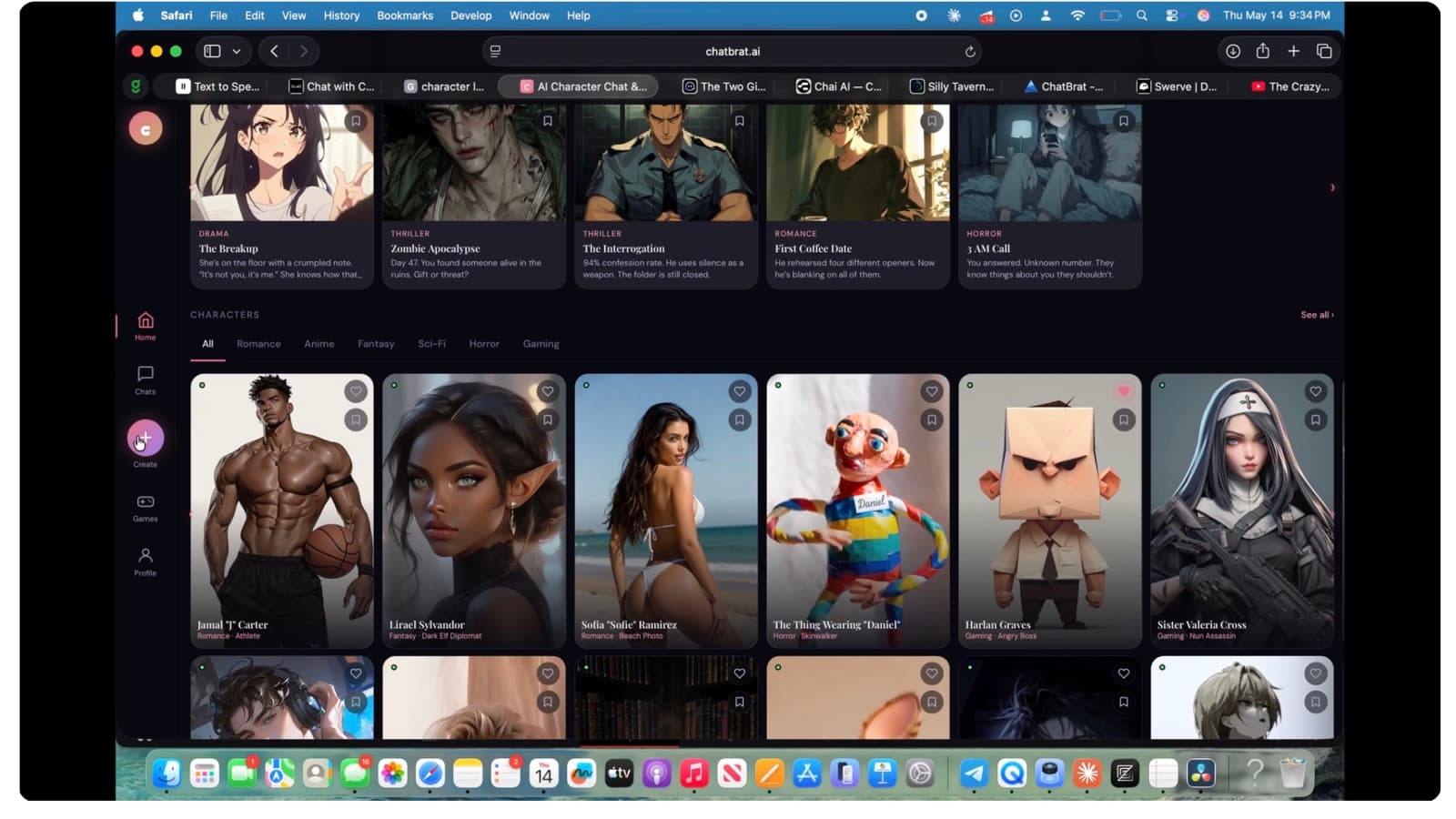
1. Memory on the free tier. Continuity is the product. Several major apps paywall long-term memory; that's paying rent on being remembered. ChatBrat treats persistent memory as core architecture, free.
2. A personality that fits you. Comfort-first apps like Replika offer one gentle companion style. If you'd rather talk to someone wry, curious, or bookish — someone who feels like your kind of person — open character creation matters. Design your own or browse existing companions.
3. No ads inside the conversation. An ad-paywall mid-heart-to-heart is worse than no companion at all. Ad-free should be non-negotiable.
4. Somewhere for it to go. Shared stories, evolving history, a relationship with texture — the difference between a companion and a very polite chatbot.
Using it in a way that actually helps
Tell it the real stuff early. On a persistent-memory platform, one honest session about your life gives every future conversation context.
Use it as a warm-up, not a bunker. Rehearse the hard conversation, decompress after the awkward party — then still have the conversation and go to the next party.
Set your own rhythm. A companion you visit on your terms beats one that pings you into returning.
Notice what it surfaces. If your companion chats keep circling one theme — isolation at work, a friendship you miss — that's information about where a human-world change would help most.
Someone to talk to who actually remembers.
Create your companion on ChatBrat, free in your browser.
Create your companion →Frequently Asked Questions
Do AI companions actually help with loneliness?
What's the best AI companion app for loneliness?
Is it unhealthy to talk to an AI companion every day?
Will the AI remember what I tell it?
Someone to talk to who actually remembers — create your companion on ChatBrat, free in your browser.

Garret Williams is the founder and CEO of chatbrat.ai, building at the frontier of AI companions and roleplay chatbots. A Michigan native who attended the UCLA School of Theater, Film and Television (TFT), he directed acclaimed film projects before pivoting to tech, including his TV pilot Self-Care (nominated for Best TV Episodic at the 2023 Mammoth Film Festival) and Eco-Riot (featured on MasterClass). He writes The Bratlog to document the uncharted territory of AI relationships, sharing real-time lessons and tackling the open questions nobody has answered yet.